

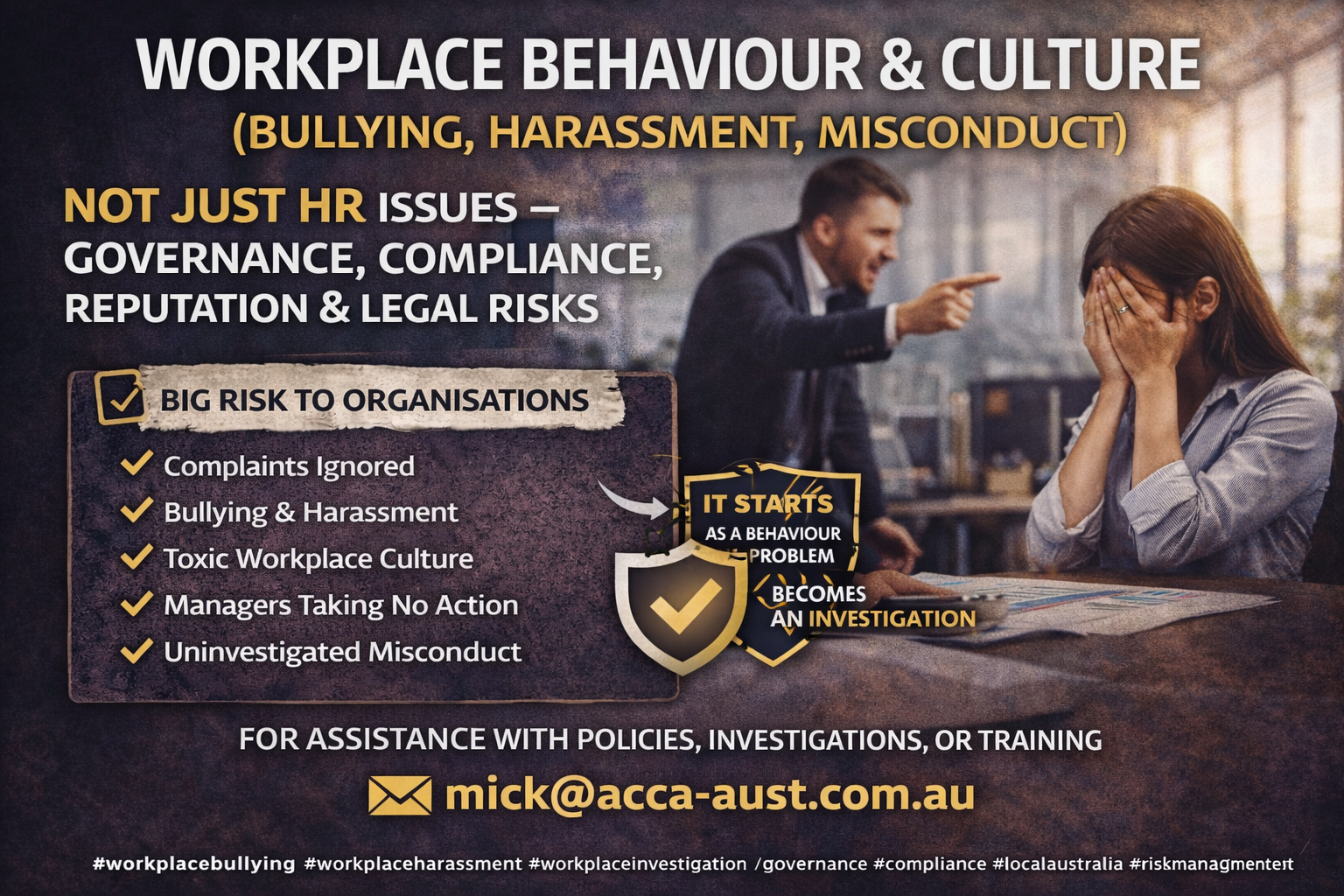
Bullying, Harassment, and Misconduct
Workplace behaviour and culture go far beyond being merely human resources concerns.
These concerns centre on governance, compliance, and risk management.
These issues directly affect governance, compliance, and risk management.
- Formal complaints
- Workplace investigations
- Sick leave and workers’ compensation claims
- Staff resignations
- Unfair dismissal claims
- Legal action
- Reputational damage
- Loss of productivity
- Audit and governance issues
So workplace behaviour is a critical organizational risk—not just a personality issue.
What Exactly Defines Workplace Behaviour?
Workplace behaviour includes:
- Bullying
- Harassment
- Sexual harassment
- Discrimination
- Aggressive management styles
- Conflicts between staff
- Inappropriate language
- Misuse of authority
- Misconduct
- Breaches of the Code of Conduct
- Victimisation
- Unprofessional behaviour
These behaviours erode workplace culture and pose serious risks to the organization.
Why Workplace Culture Matters
Workplace culture is often described as:
“The way we do things around here.”
If the culture allows:
- Bullying
- Harassment
- Aggressive behaviour
- Poor management behaviour
- Ignoring complaints
- Favouritism
- Conflicts of interest
- Lack of accountability
Policies cannot resolve the issue because staff prioritise organizational culture over formal rules.
Toxic workplace culture often leads to:
- High staff turnover
- Increased sick leave
- Low morale
- Complaints
- Investigations
- Loss of staff
- Difficulty recruiting staff
- Reputational damage
Workplace culture is a governance matter, forged by the tone set from the top.
Bullying in the Workplace
Workplace bullying involves repeated unreasonable behaviour that threatens health and safety.
Examples include:
- Yelling at staff
- Constant criticism
- Excluding staff
- Setting unrealistic deadlines
- Withholding information
- Public humiliation
- Threatening job loss
- Excessive monitoring
- Misuse of performance management
- Spreading rumours
Bullying often escalates into both a WHS and HR issue.
Harassment and Sexual Harassment
Harassment encompasses any behaviour that:
- Offends
- Humiliates
- Intimidates
Sexual harassment includes:
- Unwelcome comments
- Jokes
- Messages
- Emails
- Physical contact
- Requests for dates
- Inappropriate comments
- Displaying inappropriate material
Organizations now bear a proactive responsibility to prevent sexual harassment, not just respond to complaints.
Misconduct
Misconduct may include:
- Breaches of the Code of Conduct
- Inappropriate behaviour
- Misuse of resources
- Conflicts of interest
- Fraud or theft
- Breaches of policy
- Failure to follow lawful and reasonable directions
Misconduct often sparks formal investigations.
Why These Issues Become Major Problems
Workplace behaviour issues can quickly escalate into major problems when:
- Complaints are ignored
- Managers do not act
- Managers are the problem
- There is no reporting system
- Policies exist but are not followed
- Investigations are not handled properly
- There is no training
- Leadership tolerates poor behaviour
- There are no consequences
Many major workplace investigations stem from a minor issue that was first overlooked.
What Organizations Should Have in Place
To proactively manage workplace behaviour risks, Councils, and organizations should implement:
- Code of Conduct
- Workplace Behaviour Policy
- Bullying and Harassment Policy
- Complaint Handling Procedure
- Investigation Procedure
- Training for managers
- Training for staff
- External investigator available
- Confidential reporting process
- Proper documentation
- Leadership training
- Clear consequences for misconduct
This forms a key part of a strong compliance and governance framework.
The Role of Managers and Leaders
Managers and leaders shape workplace culture in important and impactful ways.
Staff closely watch how managers act and what they allow.
When managers:
- Ignore bad behaviour
- Do not act on complaints
- Play favourites
- Bully staff
- Do not follow policy
- Do not document issues
As a result, the workplace culture will deteriorate.
Culture Flows Powerfully from the Top Down.
Final Thought
Many organizations see workplace behaviour issues as solely the responsibility of Human Resources.
They are not.
These issues touch on governance, risk management, legal matters, and reputation.
If workplace behaviour is not managed effectively, it will inevitably become:
- A complaint
- An investigation
- A legal issue
- A reputational issue
A powerful way to manage workplace behaviour is to:
- Set clear standards
- Train staff and managers
- Act on issues early
- Investigate properly
- Ensure leadership sets the right example
Remember
Workplace culture springs from influences that go far beyond formal policies.
It is shaped by the behaviour you allow.
Contact [email protected] if you need help in this area.