

Hearsay Evidence-can You Use It?

Circumstantial Evidence in Workplace and Regulatory Investigations: A Practical Guide for Australian Investigators

Circumstantial evidence is often misunderstood—even by experienced investigators.

It is sometimes dismissed as “secondary” or “weaker” than direct evidence. In reality, circumstantial evidence is often the foundation of successful findings in both civil and criminal investigations. Australian courts have repeatedly confirmed that circumstantial evidence is not inferior; what matters is the strength of the reasoning built on it.

For workplace investigators, fraud examiners, compliance professionals, and regulators, understanding how to properly identify, assess, and rely on circumstantial evidence is a core professional skill.

This article explains:

  • what circumstantial evidence is,
  • why it is critical in workplace and regulatory investigations,
  • how it is assessed by courts and tribunals,
  • common risks in its use, and
  • the practical considerations investigators must apply to ensure defensible findings.

What Is Circumstantial Evidence?

Circumstantial evidence is evidence of surrounding facts or circumstances from which a conclusion may be inferred, rather than directly observed.

In simple terms:

  • Direct evidence explicitly proves a fact.
    (e.g. “I saw the employee falsify the record”)
  • Circumstantial evidence requires reasoning or inference
    (e.g. records changed, exclusive system access, timing, motive, and inconsistent explanations)

Australian courts have long recognised that a finding can be based entirely on circumstantial evidence, provided the reasoning process is logical and the conclusions are properly supported.

Why Circumstantial Evidence Is Critical in Workplace Investigations?

Most serious workplace misconduct occurs without witnesses.

This is particularly true in matters involving:

  • fraud and corruption
  • sexual harassment
  • bullying and coercive conduct
  • procurement irregularities
  • misuse of authority
  • elder abuse or neglect in care settings

In these situations, circumstantial indicators are often the only reliable evidence available.

Investigators must reconstruct what occurred using:

  • patterns of behaviour
  • documentary and digital records
  • timelines and sequences of events
  • access and opportunity
  • motive or benefit
  • inconsistencies in accounts
  • absence of expected actions

When assessed collectively, these factors can provide a clear and compelling evidentiary picture.

How Circumstantial Evidence Is Assessed

A key principle in Australian law is that circumstances must be considered as a whole, not in isolation.

Individual facts may seem neutral when viewed alone. However, when combined, they may strongly support a particular conclusion.

For investigators, this means:

  • Building structured timelines
  • Mapping interactions and access points
  • Cross-checking statements against objective records
  • Finding patterns rather than isolated incidents

The strength of circumstantial evidence lies in the logical accumulation of consistent indicators.

The Advantages of Circumstantial Evidence

When used correctly, circumstantial evidence offers significant investigative strengths.

  1. Greater objectivity

Documents, financial records, CCTV, metadata, and system logs are less prone to memory distortion than human recollection.

  1. Ability to expose concealed behaviour

Misconduct such as fraud, coercive control, and corruption is often deliberately hidden, leaving circumstantial traces rather than direct proof.

  1. Difficult to consistently fabricate.

False accounts often unravel when tested against independent records and timelines.

  1. Supports vulnerable witnesses

Circumstantial evidence can corroborate the accounts of vulnerable or traumatised individuals, including children, elderly people or distressed employees.

The Risks and Limitations Investigators Must Manage

Despite its strengths, circumstantial evidence carries important risks if handled poorly.

  1. Over-interpretation

Investigators may connect facts that do not logically support the conclusion.

  1. Confirmation bias

Once a theory forms, there is a risk of interpreting neutral facts as supporting that theory.

  1. Failure to consider alternatives

Courts require investigators to consider and test reasonable alternative explanations.

  1. Speculation disguised as inference

An inference must be based on evidence and logic, not suspicion or hindsight.

Australian courts have consistently warned against findings based on circumstances that do not exclude reasonable alternative explanations.

Criminal vs Civil Investigations: The Key Distinction

Investigators must understand the different standards of proof.

Criminal investigations

Circumstantial evidence must:

  • be consistent with guilt, and
  • exclude reasonable hypotheses of innocence.

The standard is beyond a reasonable doubt.

Civil and workplace investigations

The standard is the balance of probabilities, meaning:

The conclusion must be more likely than not.

However, in serious allegations (e.g. fraud or sexual misconduct), decision-makers expect clear, cogent and persuasive evidence.

This distinction is critical when preparing reports and recommendations.

Using Circumstantial Evidence Effectively in Workplace Investigations

Strong workplace investigations rely heavily on circumstantial evidence.

Effective investigators:

  • build chronological timelines
  • compare witness accounts with objective records
  • identify inconsistencies and anomalies
  • assess patterns of behaviour over time
  • document why particular inferences are drawn

Most defensible findings are not based on a single decisive fact, but on multiple consistent indicators pointing to the same conclusion.

What Investigators Must Consider When Relying on Circumstantial Evidence

A disciplined approach is essential.

Investigators should test:

  1. Logical connection

Does each piece of evidence logically support the conclusion being drawn?

  1. Independence of facts

Are multiple indicators genuinely independent, or do they rely on the same underlying assumption?

  1. Completeness of the evidence

What information is missing — and why?

  1. Alternative explanations

What other reasonable explanations exist? Have they been properly examined and ruled out where appropriate?

  1. Consistency

Do the circumstances align with each other, or are there contradictions?

  1. Weight vs quantity

A large volume of weak circumstantial evidence does not outweigh a few strong, reliable indicators.

These considerations are critical to ensuring findings withstand legal scrutiny, internal review, and external challenges.

The Central Issue: Investigator Reasoning

Across all case law and best practice guidance, one principle is consistent:

Courts and tribunals do not just assess the evidence; they assess the reasoning process used by the investigator.

Investigations fail not because circumstantial evidence is weak, but because the reasoning process is flawed.

Strong investigators:

✔ identify all relevant circumstances
✔ test competing explanations
✔ document their reasoning
✔ avoid assumptions and hindsight reasoning

Practical Takeaways for Investigators and Compliance Professionals

  • Circumstantial evidence is not second-best evidence
  • Many successful findings rely on it entirely
  • The strength of a case lies in logical reasoning, not the volume of evidence
  • Failure to test alternative explanations can fatally weaken findings
  • Clear documentation of reasoning is essential for defensibility
  • Objectivity and discipline are more important than intuition

Conclusion

Circumstantial evidence is one of the most powerful tools available to investigators.

In workplace, regulatory, and compliance investigations, it is often the only evidence available.

When used correctly, it enables investigators to:

  • reconstruct events,
  • identify misconduct,
  • support vulnerable complainants, and
  • produce findings that withstand scrutiny.

When used poorly, it can lead to incorrect conclusions, legal challenges, and reputational damage.

The role of the investigator is not to prove a theory.

It is to test that theory rigorously against all available circumstances — and to make sure any conclusion reached is logical, evidence-based and fair.
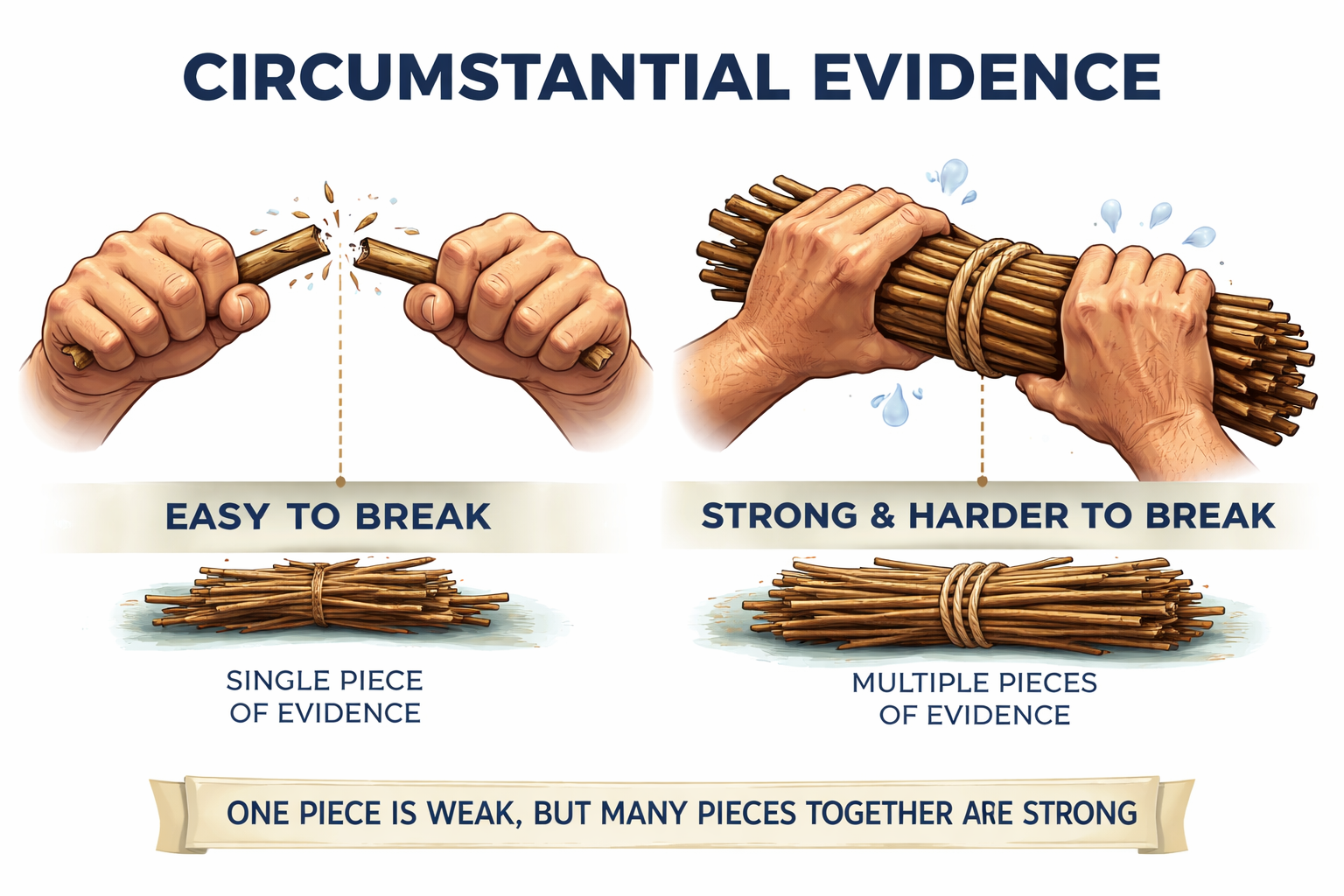
Circumstantial evidence in workplace and regulatory investigations: A practical guide for Australian Investigators.

Circumstantial Evidence in Workplace and Regulatory Investigations: A Practical Guide for Australian Investigators

Circumstantial evidence is often misunderstood even by experienced investigators.

It is sometimes dismissed as “secondary” or “weaker” than direct evidence. In reality, circumstantial evidence is often the foundation of successful findings in both civil and criminal investigations. Australian courts have repeatedly confirmed that circumstantial evidence is not inferior; what matters is the strength of the reasoning built on it.

For workplace investigators, fraud examiners, compliance professionals, and regulators, understanding how to properly identify, assess, and rely on circumstantial evidence is a core professional skill.

This article explains:

  • what circumstantial evidence is
  • why it is critical in workplace and regulatory investigations
  • how it is assessed by courts and tribunals
  • common risks in its use
  • the practical considerations investigators must apply to ensure defensible findings

What Is Circumstantial Evidence?

Circumstantial evidence is evidence of surrounding facts or circumstances from which a conclusion may be inferred, rather than directly observed.

In simple terms:

  • Direct evidence explicitly proves a fact. Example: I saw the employee falsify the record
  • Circumstantial evidence requires reasoning or inference. Example: records changed, exclusive system access, timing, motive, and inconsistent explanations

Australian courts have long recognised that a finding can be based entirely on circumstantial evidence, provided the reasoning process is logical and the conclusions are properly supported.

Why Circumstantial Evidence Is Critical in Workplace Investigations?

Most serious workplace misconduct occurs without witnesses.

This is particularly true in matters involving:

  • fraud and corruption
  • sexual harassment
  • bullying and coercive conduct
  • procurement irregularities
  • misuse of authority
  • elder abuse or neglect in care settings

In these situations, circumstantial indicators are often the only reliable evidence available.

Investigators must reconstruct what occurred using:

  • patterns of behaviour
  • documentary and digital records
  • timelines and sequences of events
  • access and opportunity
  • motive or benefit
  • inconsistencies in accounts
  • absence of expected actions

When assessed collectively, these factors can provide a clear and compelling evidentiary picture.

How Circumstantial Evidence Is Assessed

A key principle in Australian law is that circumstances must be considered as a whole, not in isolation.

Individual facts may seem neutral when viewed alone. However, when combined, they may strongly support a particular conclusion.

For investigators, this means:

  • Building structured timelines
  • Mapping interactions and access points
  • Cross checking statements against objective records
  • Finding patterns rather than isolated incidents

The strength of circumstantial evidence lies in the logical accumulation of consistent indicators.

The Advantages of Circumstantial Evidence

  1. Greater objectivity

Documents, financial records, CCTV, metadata, and system logs are less prone to memory distortion than human recollection.

  1. Ability to expose concealed behaviour

Misconduct such as fraud, coercive control, and corruption is often deliberately hidden, leaving circumstantial traces rather than direct proof.

  1. Difficult to consistently fabricate

False accounts often unravel when tested against independent records and timelines.

  1. Supports vulnerable witnesses

Circumstantial evidence can corroborate the accounts of vulnerable or traumatised individuals, including children, elderly people or distressed employees.

The Risks and Limitations Investigators Must Manage

  1. Over interpretation

Investigators may connect facts that do not logically support the conclusion.

  1. Confirmation bias

Once a theory forms, there is a risk of interpreting neutral facts as supporting that theory.

  1. Failure to consider alternatives

Courts require investigators to consider and test reasonable alternative explanations.

  1. Speculation disguised as inference

An inference must be based on evidence and logic, not suspicion or hindsight.

Criminal vs Civil Investigations: The Key Distinction

Criminal investigations

  • be consistent with guilt
  • exclude reasonable hypotheses of innocence

The standard is beyond a reasonable doubt.

Civil and workplace investigations

The standard is the balance of probabilities, meaning the conclusion must be more likely than not.

However, in serious allegations such as fraud or sexual misconduct, decision makers expect clear, cogent and persuasive evidence.

Using Circumstantial Evidence Effectively in Workplace Investigations

  • build chronological timelines
  • compare witness accounts with objective records
  • identify inconsistencies and anomalies
  • assess patterns of behaviour over time
  • document why particular inferences are drawn

What Investigators Must Consider When Relying on Circumstantial Evidence

  1. Logical connection
  2. Independence of facts
  3. Completeness of the evidence
  4. Alternative explanations
  5. Consistency
  6. Weight vs quantity

The Central Issue: Investigator Reasoning

Courts and tribunals do not just assess the evidence; they assess the reasoning process used by the investigator.

Practical Takeaways for Investigators and Compliance Professionals

  • Circumstantial evidence is not second best evidence
  • Many successful findings rely on it entirely
  • The strength of a case lies in logical reasoning, not the volume of evidence
  • Failure to test alternative explanations can fatally weaken findings
  • Clear documentation of reasoning is essential for defensibility
  • Objectivity and discipline are more important than intuition

Conclusion

Circumstantial evidence is one of the most powerful tools available to investigators.

In workplace, regulatory, and compliance investigations, it is often the only evidence available.

When used correctly, it enables investigators to:

  • reconstruct events
  • identify misconduct
  • support vulnerable complainants
  • produce findings that withstand scrutiny

The role of the investigator is not to prove a theory. It is to test that theory rigorously against all available circumstances and to make sure any conclusion reached is logical, evidence based and fair.

Interview Techniques for Workplace Investigations | Evidence-Led Approach

Investigative interviewing sits at the heart of most workplace, regulatory, and integrity investigations.

Interview Techniques for Workplace Investigations

Explore key investigative interviewing methods, from PEACE to Strategic Use of Evidence, and learn how to conduct fair, defensible workplace investigations

Investigative interviewing sits at the heart of most workplace, regulatory, and integrity investigations. Yet it remains one of the most misunderstood parts of investigative practice. Too often, interviews are treated as informal conversations or, at the other extreme, as confrontational exercises designed to secure admissions.

In reality, effective investigative interviewing is neither casual nor coercive. It is a disciplined, evidence-led process requiring judgement, preparation, and a clear understanding of the strengths and limitations of different interviewing methods.

This article outlines the key investigative interviewing models commonly used in workplace and regulatory investigations and explains how they can be applied responsibly to support fair, defensible outcomes.

Truth, Facts, and the Purpose of Investigative Interviews

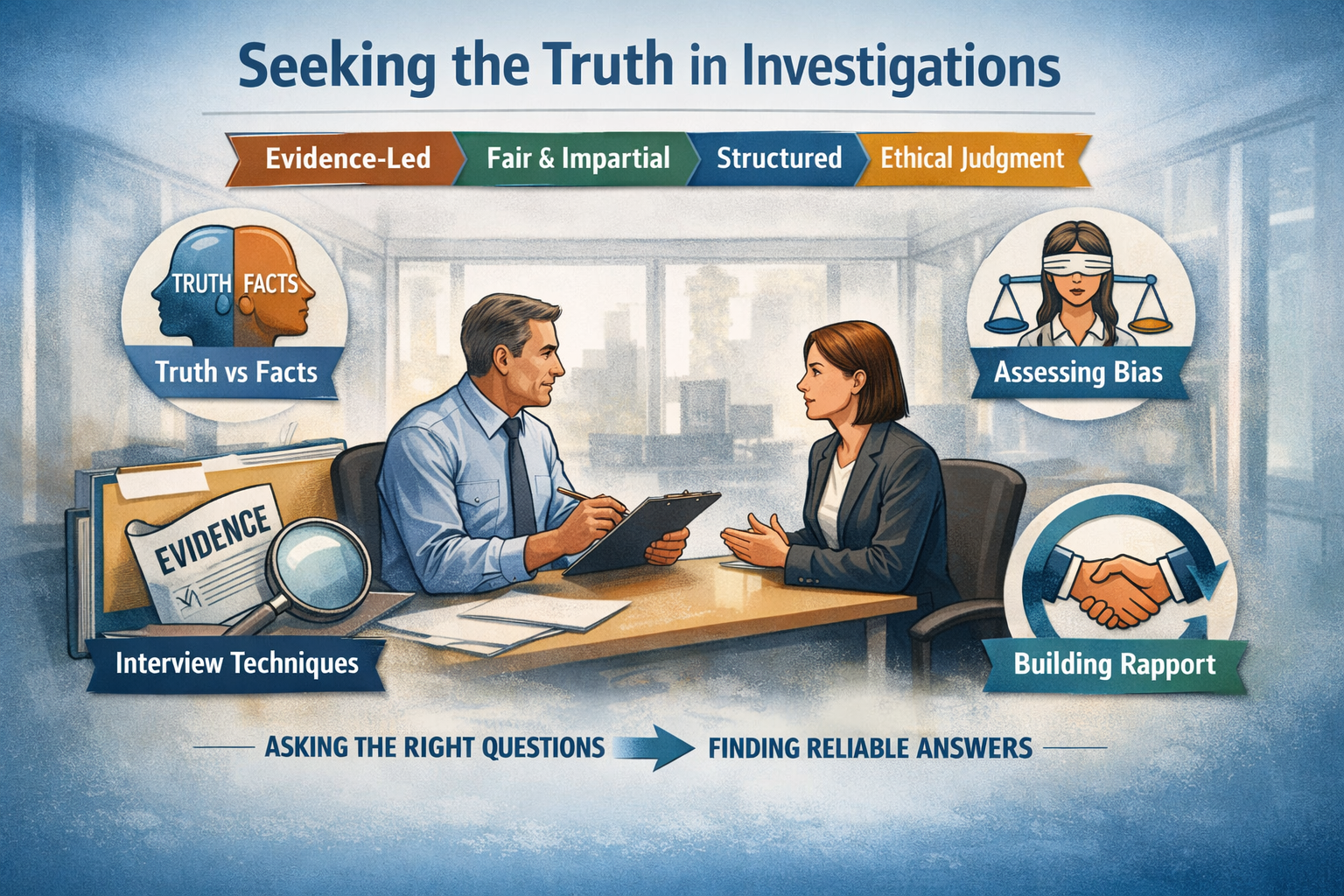
A critical starting point for any investigator is understanding the difference between truth and facts. Truth is subjective. It is shaped by perception, memory, belief, and emotion. Facts are matters that can be independently verified and supported by evidence.

The purpose of an investigative interview is not to decide who seems credible or persuasive, but to get information that can be tested against documents, records, digital data, and other corroborative material. Interviews support fact-finding; they do not replace it.

Interviews vs Interrogations in Workplace Investigations

Most workplace and regulatory investigations rely on information-gathering interviews, not interrogations. Information-gathering interviews are non-accusatory and exploratory. They get accounts, clarify issues, and identify evidence.

Interrogations are accusatory and are traditionally associated with law enforcement contexts where coercive powers exist. Applying interrogation-style techniques in workplace investigations — particularly where employment consequences are involved — can undermine procedural fairness, voluntariness, and evidentiary reliability.

Understanding this distinction is essential before selecting any interview method.

Overview of Common Investigative Interviewing Models

Modern investigators have access to a range of interview techniques. Each serves a different purpose and carries different risks.

The REID Method

The REID Method is a well-known accusatorial interrogation framework developed in the United States. It relies heavily on behavioural analysis and psychological persuasion to elicit admissions.

While historically influential, the REID Method presents significant risks in workplace and regulatory investigations. Its accusatory nature, reliance on behavioural cues, and focus on confessions may undermine procedural fairness and increase the risk of unreliable admissions, particularly for vulnerable interviewees.

Its direct application is generally unsuitable in Australian workplace investigations.

Wicklander-Zulawski (WZ) Method

The Wicklander-Zulawski method evolved from the REID tradition but tries to moderate its more confrontational elements. It emphasizes rapport, behavioural baselining, and strategic questioning.

WZ is sometimes used in loss prevention and fraud investigations where admissions may be sought. However, it remains persuasion-oriented and relies on behavioural interpretation, which can be subjective and unreliable if not carefully controlled. Any admissions obtained must be demonstrably voluntary and corroborated by independent evidence.

The PEACE Model of Investigative Interviewing

The PEACE model is a non-accusatory, information-gathering framework developed in the United Kingdom. It focuses on Planning and Preparation, Engage and Explain, Account, Closure, and Evaluation.

PEACE strongly emphasizes neutrality, open questioning, and structured reflection. It is widely regarded as best practice in workplace and regulatory investigations because it aligns closely with procedural fairness, ethical standards, and evidentiary reliability.

Motivational Interviewing

Motivational Interviewing is a collaborative, person-centred approach originally developed in behavioural change contexts. In investigations, it can be useful where misconduct arises from poor judgement, pressure, or ethical drift rather than deliberate wrongdoing.

MI focuses on reducing resistance, exploring ambivalence, and encouraging candid disclosure without confrontation. However, it is not a substitute for evidence gathering and is less effective where interviewees are deliberately deceptive or legally advised.

Structured Interviewing

Structured Interviewing relies on pre-planned questions asked in a consistent sequence across interviewees. It is useful where multiple witnesses or respondents occupy similar roles or where consistency is critical.

This approach enhances defensibility and transparency but can be overly rigid if applied as a script rather than a framework. Skilled investigators balance structure with flexibility.

Cognitive Interviewing

The Cognitive Interview is an evidence-based technique designed to improve memory recall, particularly for witnesses. It uses techniques such as context reinstatement and free narrative recall to increase the quantity and accuracy of information obtained.

While highly effective for cooperative interviewees, cognitive interviewing is time intensive and less suitable for hostile or deceptive subjects.

Kinesic (Behavioural Analysis) Interviewing

Kinesic interviewing focuses on interpreting verbal and non-verbal behaviour as indicators of credibility or deception. While behavioural cues may provide contextual awareness, research consistently shows they are unreliable as indicators of truthfulness.

Over-reliance on behavioural interpretation increases the risk of confirmation bias and flawed conclusions. Best practice treats behavioural cues as prompts for further inquiry, not proof.

Strategic Use of Evidence (SUE)

The Strategic Use of Evidence is an evidence-led approach that focuses on when and how evidence is disclosed during interviews. Rather than confronting interviewees early, evidence is introduced gradually to test explanations and identify inconsistencies.

SUE strengthens defensibility by reducing reliance on demeanour and increasing reliance on corroborated facts. It is particularly effective in fraud, corruption, and misconduct investigations involving documentary or digital evidence.

The Importance of Rapport in Investigative Interviews

No matter the interview method used, rapport is critical. Rapport does not mean friendliness or agreement. It means establishing a professional environment in which interviewees feel respected and willing to engage.

Rapport improves cooperation, recall, and information quality. However, it must remain professionally bounded. Over-familiarity or perceived alignment can undermine objectivity and expose investigations to challenge.

Selecting the Appropriate Interview Method

There is no single “right” interview technique. Choice should be guided by:

  • The seriousness of the allegations
  • The role of the interviewee
  • Available evidence
  • Legal and organisational risk
  • Vulnerability considerations

In most workplace investigations, information-gathering approaches such as PEACE, Structured Interviewing, Conversation Management, and SUE provide the strongest balance of fairness and defensibility.

Risks of Misapplying Interview Techniques

Misapplication of interview methods is a common cause of investigative failure. Confirmation bias, premature assumptions of guilt, behavioural over-interpretation, and poorly timed evidence disclosure can all contaminate outcomes.

Investigators must understand not only how interview models work, but when not to use them.

Conclusion: Judgement Over Technique

Investigative interviewing is not about mastering techniques; it is about exercising judgement. Models provide structure, not answers. Evidence provides certainty, not intuition.

Investigators who remain evidence-led, fair, and adaptable are best placed to reach conclusions that withstand scrutiny and maintain organisational trust.

Why should I use an external investigator rather than an internal investigator for workplace matters?

use an external investigator rather than an internal investigator for workplace matters

Why should I use an external investigator rather than an internal investigator for workplace matters? 

In today’s workplace, addressing issues such as misconduct, bullying, harassment, fraud, and compliance violations is essential for maintaining a healthy organizational culture. Whether a company deals with minor infractions or major disputes, investigations play an important role in resolving workplace matters. One of the most important decisions an organization must make is whether to use an external investigator or rely on an internal investigator for these inquiries.

In this blog post, we will explore the pros and cons of using an external investigator compared to an internal investigator. By the end, you will have a better understanding of how to choose the right approach for your organization’s specific needs, and how each option could affect workplace investigations related to employee misconduct, harassment complaints, fraud, and policy violations.


What is a Workplace Investigation?

Before we dive into the pros and cons, it’s important to define what a workplace investigation entails. A workplace investigation is a formal process used to examine issues such as allegations of misconduct, fraud, harassment, bullying, policy breaches, or any other actions that violate company policies or legal standards. The goal is to determine the facts of the situation, provide fair treatment to all parties, and make sure the organization follows relevant employment laws and regulations.

Usually, workplace investigations are triggered by formal complaints from employees, whistleblower reports, or concerns raised by management. The person investigating must remain impartial and objective to ensure the integrity of the findings.


Why the Choice of Investigator Matters?

Whether you choose an external investigator, or an internal investigator, can significantly affect the outcome of the investigation and how it is perceived by employees, stakeholders, and even legal bodies. Each option comes with its own advantages and disadvantages, which must be weighed carefully.


Advantages of Using an External Investigator

  1. Impartiality and Objectivity

One of the most compelling reasons for using an external investigator is the assurance of objectivity. External investigators operate as independent third parties with no connections to the organization. This independence is especially important in sensitive matters involving senior management or high-profile employees, where internal bias could be suspected.

An impartial investigator can bring credibility to the investigation, as employees are more likely to trust the process when it is clear the investigator has no interest in the outcome. This increased trust can improve cooperation from the involved parties, ensuring a more thorough and reliable investigation.


  1. Specialized Expertise

Many external investigators specialize in workplace matters and have advanced skills in investigative techniques, interviewing, and employment law. Their specialized knowledge lets them handle complex or sensitive cases more effectively than internal investigators who may lack experience in specific areas, such as fraud investigations, compliance violations, or workplace harassment.

Hiring an external investigator also grants access to a broader network of specialists, including legal consultants, forensic experts, and financial auditors, which can be invaluable when dealing with intricate cases like financial misconduct or regulatory breaches.


  1. Credibility in Legal and Regulatory Scrutiny

If an investigation leads to legal proceedings or regulatory scrutiny, having an external investigator lends more credibility to the investigation. Courts and regulatory bodies often view externally investigated matters as more trustworthy because they are less likely to be influenced by internal politics or conflicts of interest.

For example, in cases of workplace harassment or discrimination claims, the findings of an external investigation may carry more weight in legal settings than those of an internal one. This could prove beneficial in protecting the organization from litigation or regulatory penalties.


  1. Confidentiality

External investigators are bound by professional standards to maintain strict confidentiality throughout the investigation process. This can be important where sensitive information or high-ranking employees are involved. Employees may feel more comfortable sharing critical details with someone outside the organization, which can lead to a more thorough investigation.

External investigators are also skilled at handling whistleblower complaints, where maintaining confidentiality and protecting the identity of the complainant is paramount to avoiding retaliation.


  1. Focus and Timeliness

Since external investigators are brought in specifically for the investigation, they can dedicate their full attention and resources to completing it quickly and efficiently. Internal investigators, who may have other responsibilities within the organization, could be stretched thin, resulting in delays. Having an external investigator focused only on the investigation makes sure it progresses without unnecessary interruptions.


Disadvantages of Using an External Investigator

  1. Cost

One of the most significant downsides to hiring an external investigator is the cost. External investigations, especially those conducted by specialists, can be expensive, particularly if the case is complex or involves multiple parties. For small to medium-sized businesses, this cost may be prohibitive, especially when there are budget constraints.

The expenses associated with external investigators can quickly add up if the investigation drags on for a long time. Organizations must weigh the benefits of external knowledge against the impact on their bottom line.


  1. Limited Knowledge of the Organization

While external investigators bring specialized knowledge to the table, they often lack familiarity with the organization’s culture, policies, and operational structure. This could result in a steep learning curve as the investigator familiarises themselves with how the organization operates, potentially slowing down the investigation.

Internal investigators often know a lot about the organization’s inner workings and culture, which can streamline the investigation process. The external investigator’s lack of context could also lead to recommendations that may not align with the organization’s values or needs.


  1. Employee Resistance

Some employees may resist participating in investigations led by an external investigator. This resistance may come from a sense of unfamiliarity or discomfort with sharing sensitive information with someone outside the organization. Employees used to working with internal HR teams or internal compliance officers may feel apprehensive about involving an outsider, especially if they fear legal or reputational consequences.

This lack of rapport with employees can hinder the external investigator’s ability to gather essential information, affecting the thoroughness and accuracy of the investigation.


  1. Short-Term Involvement

Once the external investigator completes their investigation and delivers the final report, their involvement typically ends. They may not have a personal stake in the long-term success of the organization or in making sure their recommendations are followed through. This could result in a disconnect between the findings of investigating and making necessary changes.

Internal investigators are part of the organization long-term and are often responsible for overseeing the follow-up process, making sure corrective actions are taken and that issues do not recur.


Advantages of Using an Internal Investigator

  1. Cost-Effectiveness

The most obvious advantage of using an internal investigator is cost savings. Since internal investigators are already part of the organization, there are no additional fees associated with their involvement in an investigation. This can be beneficial for organizations with limited budgets that cannot justify the expense of hiring an external consultant.

Internal investigators may come from HR, compliance, or legal departments, depending on the workplace matter. Their familiarity with the organization can help streamline the process, letting the investigation go forward efficiently without added costs.


  1. Deep Knowledge of the Organization

Internal investigators have a distinct advantage because they are already familiar with the organization’s policies, practices, culture, and operational structure. This knowledge lets them navigate the complexities of the organization more easily than an outsider.

For example, internal investigators can quickly identify key stakeholders, access relevant documents, and understand the company’s dynamics, making it easier to gather information. They are also likely to have a good understanding of past incidents or earlier investigations that could provide context for current matters.


  1. Employee Trust and Cooperation

Sometimes, employees may feel more comfortable working with an internal investigator they know and trust, particularly if the investigator comes from the HR or compliance department. This familiarity can encourage greater cooperation, leading to more open and honest interviews.

Internal investigators may also be better positioned to address issues related to organizational culture or systemic problems, as they are already part of the workplace environment and have a personal stake in improving it.


  1. Greater Long-Term Accountability

Since internal investigators remain part of the organization after the investigation concludes, they have greater accountability for making sure the findings and recommendations are put into practice. Internal investigators can play a key role in overseeing corrective actions, such as revising policies, providing training, or disciplining employees involved in misconduct.

Their ongoing involvement ensures continuity and helps maintain the organization’s commitment to addressing the issues uncovered during the investigation.


Disadvantages of Using an Internal Investigator

  1. Potential Bias

One of the most significant drawbacks of using an internal investigator is the potential for bias, or at least the perception of bias. Internal investigators may have personal relationships with the parties involved, or they may be influenced by internal power dynamics. Even if the internal investigator strives to remain impartial, employees may still perceive the process as unfair, especially if the investigator reports to the same management structure as the accused.

This can erode trust in the investigation and reduce cooperation from the parties involved.


  1. Conflict of Interest

Internal investigators may face conflicts of interest, particularly in cases involving senior management or executives. If the investigator reports directly to the same individuals under investigation, there is a risk that the process will be compromised, either intentionally or unintentionally.

This is where an external investigator’s independence proves useful, as they have no direct ties to the organization’s hierarchy or employees.


  1. Lack of Expertise

Unless the internal investigator specializes in workplace investigations, they may lack the skills and knowledge necessary to handle complex cases, such as fraud investigations, financial misconduct, or discrimination claims.

Internal investigators often juggle multiple responsibilities, such as compliance or HR duties, which could affect the depth and quality of the investigation.


Conclusion

When deciding between using an external investigator and an internal investigator, organizations must weigh the advantages and disadvantages of each option. External investigators offer impartiality, specialized knowledge, and credibility in legal settings, but they come with higher costs and potential knowledge gaps about the organization. Internal investigators offer cost-effectiveness, organizational knowledge, and long-term accountability, but they may be prone to bias and conflicts of interest.

The right choice depends on the workplace issue, the size, and structure of the organization, and the resources available. By considering these factors, organizations can make an informed decision that ensures fairness, compliance, and a positive workplace environment.

Trauma-Informed Interviewing: A Compassionate and Effective Approach

I have interviewed many people over the years. Complainants, offenders, and witnesses. You should prepare an interview plan to allow you to address key issues. What are you trying to discover? You sit down and ask the questions and expect the answers. But do we think enough about the person we are speaking to?

I recently interviewed a witness. It related to allegations of bullying. A relatively simple matter to investigate. Allegations made, witnesses present, evidence gathered, report written.

However, there is another side we, as investigators, must consider. The impact of the investigation on all parties. The witness broke down during the interview. Was this my fault? Did I fail to prepare properly? Did I fail to consider the “feelings” of the witness?

This led me to consider the need to adopt a compassionate and effective approach to trauma-informed interviewing.

I realised trauma-based interviewing is an approach to communication that recognises and respects the potential impact of trauma on an individual’s life.

It is a sensitive, empathetic, and supportive method to interview individuals who have experienced trauma, ensuring that they feel comfortable and safe while sharing their experiences. This technique not only helps the interviewee feel more at ease but also promotes more accurate and reliable information gathering.

Investigators need to think more about the person we are about to speak to. It does not matter whether they are the complainant, a witness, or the alleged offender.

We need to appreciate trauma is an emotional response to an event or series of events that a person perceives as physically or emotionally harmful. It can have lasting adverse effects on an individual’s mental, emotional, and physical well-being. The experience of trauma is subjective, and people react to and recover from traumatic events in different ways.

Investigators sometimes do not appreciate the emotions felt by persons we speak to. We plough on with the investigation, gathering evidence and getting ready for the next one. We should consider the fundamentals of trauma-informed interviewing.

Trauma-informed interviewing is based on the understanding that many individuals have experienced trauma in their lives. This approach allows for a more compassionate and effective dialogue, providing a safe space for the interviewee to share their story without re-traumatizing them. We do not know what feelings we may trigger as we speak to the parties.

I conducted some research to identify what I believe to be the key principles of trauma-based interviewing. These are:

Safety: Create a safe and welcoming environment for the interviewee. Ensure the space is free from distractions, noise, and potential triggers. Communicate the purpose and goals of the interview clearly and maintain confidentiality.

Empathy and Compassion: Approach the interview with genuine empathy and understanding. Listen actively, validate the interviewee’s feelings, and acknowledge their courage in sharing their experiences.

Choice and Control: Allow the interviewee to have control over the process. Give them the option to choose.

Explain the process: Make sure the interviewee knows what will happen. Do not provide false assurances (no one will find out, etc.).

Follow up: Where appropriate, follow up personally.  If not, speak to someone in the organisation to alert them to potential difficulties with the person because of the trauma of the incident.

If you need help, then contact me ([email protected] or www.acca-aust.com.au)

#acca #TraumaInformedInterviewing #TraumaBasedApproach #InterviewingSurvivors #TraumaRecovery #InterviewingSkills #InterviewTechniques #TherapeuticInterviewing #InterviewingTraumaVictims #TraumaTherapy #MentalHealthInterviewing #PsychologicalTrauma #TraumaAwareness #InterviewingBestPractices #TraumaSensitiveInterviewing

FREE Fraud Health Check for Small Businesses

Think you might be the Victim of Fraud? 

Fill out the form below to get sent our free survey that provides you with an indication of the potential vulnerability of your business to fraudulent activities.

    FREE Fraud Health Check for Businesses

    Think you might be the Victim of Fraud? 

    Fill out the form below to get sent our free survey that provides you with an indication of the potential vulnerability of your business to fraudulent activities.