
 Mick Symons
Are You Being Ripped Off by Your Employees?
by Mick Symons

Are You Being Ripped Off by Your Employees?
If your company purchases goods or services from a third party, then you are probably being ripped off!
Procurement fraud represents a significant challenge for organizations of all sizes. Costly, elusive, and difficult to prosecute, procurement fraud can silently drain resources and undermine trust within a business. In the past five years, procurement fraud has been a significant issue in Australia, with substantial financial impacts. The estimated cost of fraud against the Commonwealth alone rose from $91.6 million in 2017–18 to $265.9 million in 2020–21.
Procurement fraud can hit government at all levels and the private sector.
New South Wales: A Pakistani national was charged with sending proceeds from a multimillion-dollar scam targeting the NSW government overseas, involving $2.1 million mistakenly transferred to scammers posing as a legitimate financial institution.
South Australia: An audit revealed that Ventia, holding a $4 billion contract with the South Australian government, overcharged for services, including a $65,000 quote for a fence estimated at $2,000 by a local contractor.
Procurement Fraud Has Many Tentacles:
Fake Invoicing
A small construction company discovered that an employee had created a fake supplier and submitted false invoices for non-existent services. The employee approved the payments, diverting funds to their own account. Fraud was detected only after an internal audit.
Collusion With Vendors
In a medium-sized manufacturing firm, procurement staff colluded with vendors to inflate prices. The staff received kickbacks from the vendors for approving overpriced contracts. Uncovered by information from a whistleblower.
Unauthorized Purchases
A retail business faced procurement fraud when an employee made unauthorized purchases using the company’s procurement system. The employee ordered personal items and disguised them as business expenses. Identified after routine audit.
This article explores the key aspects of procurement fraud, digging into its causes, common schemes, and effective mitigation strategies. By understanding the risks and putting preventive measures into practice, organizations can safeguard their resources and enhance operational integrity.
What Is Procurement Fraud?
Procurement fraud occurs when individuals or groups manipulate the purchasing process to gain undue financial or material advantage. This manipulation often involves collaboration between employees and suppliers, creating an environment ripe for fraudulent activity.
For example: A vendor is awarded a contract at an inflated price. In exchange, the employee who approved the deal receives kickbacks, which could be cash, gifts, or other favours.
Procurement fraud is more likely to occur in organizations with high purchasing volumes and inadequate oversight. Internal factors, such as financial stress, personal challenges, or dissatisfaction with the employer, often motivate offenders.
Five Common Types of Procurement Fraud
Kickbacks
This is one of the most common forms of procurement fraud. This scheme involves collusion between employees and suppliers. The supplier is awarded a contract at an inflated price, and in return, the employee receives compensation, often termed a “kickback.” This can be money, benefits such as goods and/or travel for self or family.
Conflicts of Interest
In conflict-of-interest schemes, the employee manipulates the procurement process to benefit friends or family members. While awarding contracts to acquaintances is not inherently fraudulent, the absence of transparency and adherence to fair bidding processes introduces the element of fraud.
Sham Company Payments
This involves payments made to shell companies that provide no actual goods or services. Such schemes flourish in environments with lax procurement oversight, where invoice reconciliation and purchase order matching are not diligently performed. NO separation of duties.
Inflation or Under-Delivery
Here, suppliers inflate prices or deliver substandard or fewer goods than agreed upon in the contract. Employees often facilitate these discrepancies for compensation.
Falsified Statements
This form of fraud occurs when suppliers misrepresent their qualifications or certifications. Claiming to have indigenous mix for government contracts. Providing food or other items claiming they are organic, but the goods are standard.
How to Spot Procurement Fraud
Some common signs:
Unusual Employee Behaviour
Observe sudden changes in the lifestyle of employees involved in procurement. A significant improvement in material wealth, such as driving an expensive car, may justify closer scrutiny.
Irregular Bid Activity
Be alert to anomalies in the bidding process, such as disproportionate support for a particular vendor or unauthorized subcontracting. Many variations in contract once awarded.
Material or Service Discrepancies
Track the quality and quantity of delivered goods. Discrepancies in inventory levels or subpar materials are potential red flags.
Discrepancies in Invoices
Cross-check invoices with purchase orders and delivery receipts. Inconsistent or inflated invoices often signal fraudulent activity. Another reason for separation of duties.
Responding to Procurement Fraud
Policy:
You MUST have a fraud and procurement (corruption) policy. This policy should outline the action to take if you discover/suspect procurement fraud.
Notification:
What is the immediate action–what areas should be advised? This may include HR, Legal, and/or the police.
Communication Plan:
Develop internal and external communication strategies, including appointing a PR representative to handle public relations. The public response to a fraud can cripple a business.
Audit Process:
Investigate to determine the fraud and identify all participants.
Stakeholder Engagement:
Notify board members, investors, and regulators as necessary to ensure transparency and accountability.
Best Practices in Preventing Procurement Fraud.
You need to be proactive.
Procurement Training
Provide training to procurement and finance teams about common fraud schemes and the importance of vigilance. Incorporate fraud awareness into the onboarding process for new employees.
Provide ongoing training to tell the team about emerging threats.
Establish Approval Controls
Implement a documented procurement process with multiple layers of approval. This approach makes sure purchases undergo scrutiny, making it harder for fraudulent transactions to slip through. Once again-Separation of Duties.
Develop Preferred Vendor Lists
Work exclusively with vetted and approved suppliers. By conducting rigorous due diligence and maintaining a pre-qualified vendor list, organizations can reduce exposure to fraudulent suppliers.
Conduct Regular Audits
Schedule regular internal and external audits to identify potential vulnerabilities in procurement practices. High-visibility audits act as a deterrent to would-be fraudsters.
Create a Whistleblower Policy
Encourage employees to report suspicious activity without fear of retaliation. A strong whistleblower policy fosters a culture of accountability and transparency, helping to uncover fraud early.
Building a Fraud-Resistant Culture
Fraud will flourish if there are weak internal controls and poor communication. A strong organizational culture that emphasizes ethical behaviour, transparency, and accountability is key to preventing fraud.
Tips for Cultivating an Ethical Culture:
Leadership Commitment:
Lead from the top. Display a commitment to ethical practices.
Explicit Policies:
Develop and Enforce Policies That Outline Acceptable Behaviours and Procurement Procedures.
Open Communication:
Develop processes for employees to voice concerns or report irregularities (anonymous reporting, strong anti-reprisal policies).
Regular Training:
Inform all employees of fraud risks and prevention strategies. Toolbox talks and/or planned discussions with examples.
Conclusion
Procurement fraud poses a significant threat, undermining trust and depleting resources in both businesses and government entities. By understanding the various forms of procurement fraud, recognizing the warning signs, and putting preventive measures into practice, companies, and government can greatly mitigate their risk.
Integrating strong internal controls, conducting regular audits, and fostering a whistleblower-friendly culture are essential steps to protect procurement processes. These efforts not only safeguard financial resources but also bolster the integrity and reputation of the organization.
I can help protect you, your business, and your employees by ensuring you have the proper policies and ensuring matters are handled properly, fairly, and legally. Contact ACCA-AUST at [email protected]
#ProcurementFraud #RiskManagement #EthicalLeadership #BusinessIntegrity
Are You Being Ripped Off by Your Employees?
by Mick Symons
Are You Being Ripped Off by Your Employees? If your company purchases goods or services from a third party, then you are probably being ripped off!
How to avoid the Christmas present you do NOT want
by Mick Symons

You do not have to be the Christmas GRINCH, but you do have to be careful.

Evidence based techniques for workplace investigations
by Mick Symons

Are you ready to uncover the best practice interview techniques for Workplace Investigations?
Circumstantial evidence – can you use it
by Mick Symons
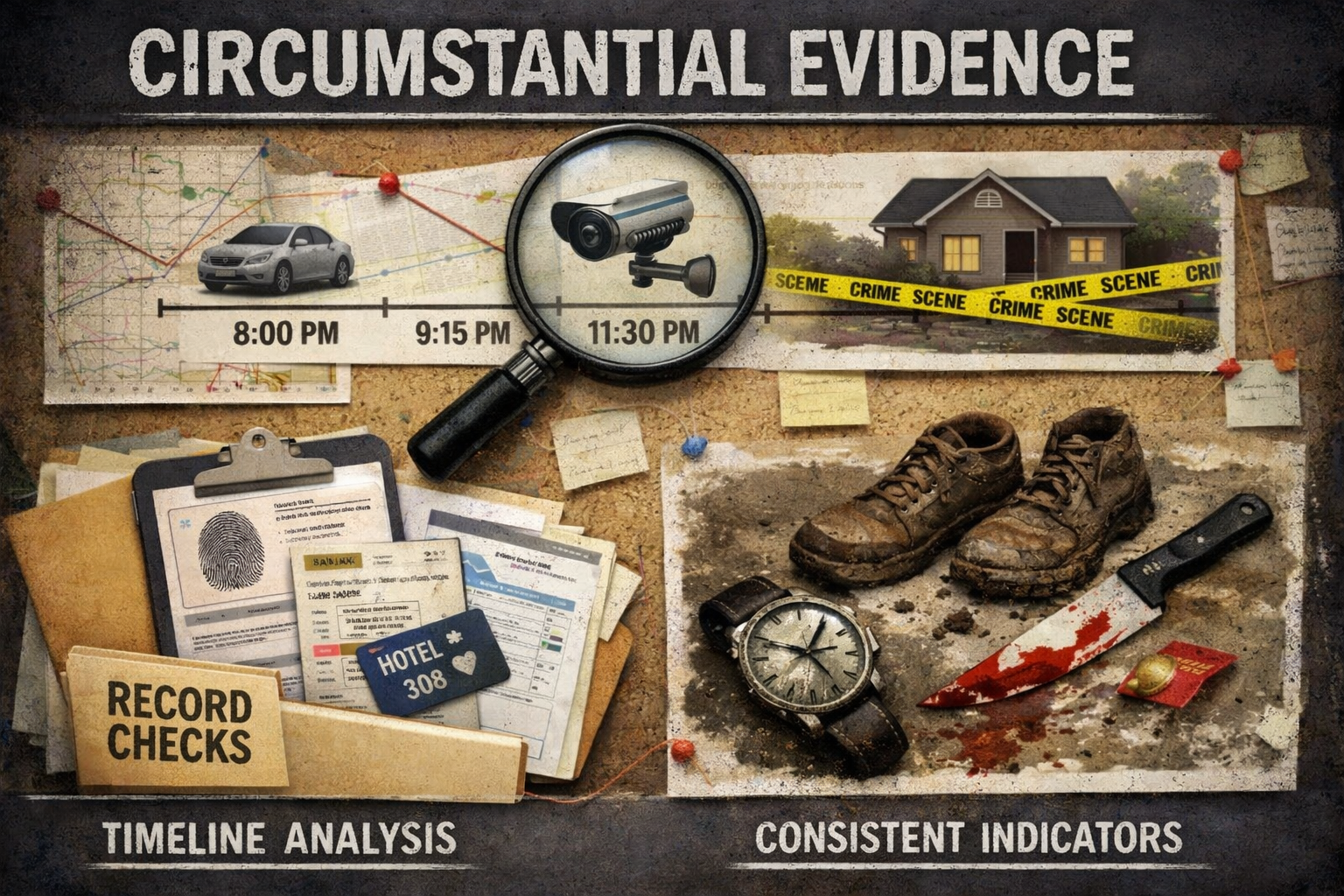
There are advantages to circumstantial evidence in the workplace investigation.
Hearsay Evidence-can You Use It?
by Mick Symons
Circumstantial Evidence in Workplace and Regulatory Investigations: A Practical Guide for Australian Investigators
Circumstantial evidence is often misunderstood—even by experienced investigators.
It is sometimes dismissed as “secondary” or “weaker” than direct evidence. In reality, circumstantial evidence is often the foundation of successful findings in both civil and criminal investigations. Australian courts have repeatedly confirmed that circumstantial evidence is not inferior; what matters is the strength of the reasoning built on it.
For workplace investigators, fraud examiners, compliance professionals, and regulators, understanding how to properly identify, assess, and rely on circumstantial evidence is a core professional skill.
This article explains:
- what circumstantial evidence is,
- why it is critical in workplace and regulatory investigations,
- how it is assessed by courts and tribunals,
- common risks in its use, and
- the practical considerations investigators must apply to ensure defensible findings.
What Is Circumstantial Evidence?
Circumstantial evidence is evidence of surrounding facts or circumstances from which a conclusion may be inferred, rather than directly observed.
In simple terms:
- Direct evidence explicitly proves a fact.
(e.g. “I saw the employee falsify the record”) - Circumstantial evidence requires reasoning or inference
(e.g. records changed, exclusive system access, timing, motive, and inconsistent explanations)
Australian courts have long recognised that a finding can be based entirely on circumstantial evidence, provided the reasoning process is logical and the conclusions are properly supported.
Why Circumstantial Evidence Is Critical in Workplace Investigations?
Most serious workplace misconduct occurs without witnesses.
This is particularly true in matters involving:
- fraud and corruption
- sexual harassment
- bullying and coercive conduct
- procurement irregularities
- misuse of authority
- elder abuse or neglect in care settings
In these situations, circumstantial indicators are often the only reliable evidence available.
Investigators must reconstruct what occurred using:
- patterns of behaviour
- documentary and digital records
- timelines and sequences of events
- access and opportunity
- motive or benefit
- inconsistencies in accounts
- absence of expected actions
When assessed collectively, these factors can provide a clear and compelling evidentiary picture.
How Circumstantial Evidence Is Assessed
A key principle in Australian law is that circumstances must be considered as a whole, not in isolation.
Individual facts may seem neutral when viewed alone. However, when combined, they may strongly support a particular conclusion.
For investigators, this means:
- Building structured timelines
- Mapping interactions and access points
- Cross-checking statements against objective records
- Finding patterns rather than isolated incidents
The strength of circumstantial evidence lies in the logical accumulation of consistent indicators.
The Advantages of Circumstantial Evidence
When used correctly, circumstantial evidence offers significant investigative strengths.
- Greater objectivity
Documents, financial records, CCTV, metadata, and system logs are less prone to memory distortion than human recollection.
- Ability to expose concealed behaviour
Misconduct such as fraud, coercive control, and corruption is often deliberately hidden, leaving circumstantial traces rather than direct proof.
- Difficult to consistently fabricate.
False accounts often unravel when tested against independent records and timelines.
- Supports vulnerable witnesses
Circumstantial evidence can corroborate the accounts of vulnerable or traumatised individuals, including children, elderly people or distressed employees.
The Risks and Limitations Investigators Must Manage
Despite its strengths, circumstantial evidence carries important risks if handled poorly.
- Over-interpretation
Investigators may connect facts that do not logically support the conclusion.
- Confirmation bias
Once a theory forms, there is a risk of interpreting neutral facts as supporting that theory.
- Failure to consider alternatives
Courts require investigators to consider and test reasonable alternative explanations.
- Speculation disguised as inference
An inference must be based on evidence and logic, not suspicion or hindsight.
Australian courts have consistently warned against findings based on circumstances that do not exclude reasonable alternative explanations.
Criminal vs Civil Investigations: The Key Distinction
Investigators must understand the different standards of proof.
Criminal investigations
Circumstantial evidence must:
- be consistent with guilt, and
- exclude reasonable hypotheses of innocence.
The standard is beyond a reasonable doubt.
Civil and workplace investigations
The standard is the balance of probabilities, meaning:
The conclusion must be more likely than not.
However, in serious allegations (e.g. fraud or sexual misconduct), decision-makers expect clear, cogent and persuasive evidence.
This distinction is critical when preparing reports and recommendations.
Using Circumstantial Evidence Effectively in Workplace Investigations
Strong workplace investigations rely heavily on circumstantial evidence.
Effective investigators:
- build chronological timelines
- compare witness accounts with objective records
- identify inconsistencies and anomalies
- assess patterns of behaviour over time
- document why particular inferences are drawn
Most defensible findings are not based on a single decisive fact, but on multiple consistent indicators pointing to the same conclusion.
What Investigators Must Consider When Relying on Circumstantial Evidence
A disciplined approach is essential.
Investigators should test:
- Logical connection
Does each piece of evidence logically support the conclusion being drawn?
- Independence of facts
Are multiple indicators genuinely independent, or do they rely on the same underlying assumption?
- Completeness of the evidence
What information is missing — and why?
- Alternative explanations
What other reasonable explanations exist? Have they been properly examined and ruled out where appropriate?
- Consistency
Do the circumstances align with each other, or are there contradictions?
- Weight vs quantity
A large volume of weak circumstantial evidence does not outweigh a few strong, reliable indicators.
These considerations are critical to ensuring findings withstand legal scrutiny, internal review, and external challenges.
The Central Issue: Investigator Reasoning
Across all case law and best practice guidance, one principle is consistent:
Courts and tribunals do not just assess the evidence; they assess the reasoning process used by the investigator.
Investigations fail not because circumstantial evidence is weak, but because the reasoning process is flawed.
Strong investigators:
✔ identify all relevant circumstances
✔ test competing explanations
✔ document their reasoning
✔ avoid assumptions and hindsight reasoning
Practical Takeaways for Investigators and Compliance Professionals
- Circumstantial evidence is not second-best evidence
- Many successful findings rely on it entirely
- The strength of a case lies in logical reasoning, not the volume of evidence
- Failure to test alternative explanations can fatally weaken findings
- Clear documentation of reasoning is essential for defensibility
- Objectivity and discipline are more important than intuition
Conclusion
Circumstantial evidence is one of the most powerful tools available to investigators.
In workplace, regulatory, and compliance investigations, it is often the only evidence available.
When used correctly, it enables investigators to:
- reconstruct events,
- identify misconduct,
- support vulnerable complainants, and
- produce findings that withstand scrutiny.
When used poorly, it can lead to incorrect conclusions, legal challenges, and reputational damage.
The role of the investigator is not to prove a theory.
It is to test that theory rigorously against all available circumstances — and to make sure any conclusion reached is logical, evidence-based and fair.
Circumstantial evidence in workplace and regulatory investigations: A practical guide for Australian Investigators.
by Mick Symons
Circumstantial Evidence in Workplace and Regulatory Investigations: A Practical Guide for Australian Investigators
Circumstantial evidence is often misunderstood even by experienced investigators.
It is sometimes dismissed as “secondary” or “weaker” than direct evidence. In reality, circumstantial evidence is often the foundation of successful findings in both civil and criminal investigations. Australian courts have repeatedly confirmed that circumstantial evidence is not inferior; what matters is the strength of the reasoning built on it.
For workplace investigators, fraud examiners, compliance professionals, and regulators, understanding how to properly identify, assess, and rely on circumstantial evidence is a core professional skill.
This article explains:
- what circumstantial evidence is
- why it is critical in workplace and regulatory investigations
- how it is assessed by courts and tribunals
- common risks in its use
- the practical considerations investigators must apply to ensure defensible findings
What Is Circumstantial Evidence?
Circumstantial evidence is evidence of surrounding facts or circumstances from which a conclusion may be inferred, rather than directly observed.
In simple terms:
- Direct evidence explicitly proves a fact. Example: I saw the employee falsify the record
- Circumstantial evidence requires reasoning or inference. Example: records changed, exclusive system access, timing, motive, and inconsistent explanations
Australian courts have long recognised that a finding can be based entirely on circumstantial evidence, provided the reasoning process is logical and the conclusions are properly supported.
Why Circumstantial Evidence Is Critical in Workplace Investigations?
Most serious workplace misconduct occurs without witnesses.
This is particularly true in matters involving:
- fraud and corruption
- sexual harassment
- bullying and coercive conduct
- procurement irregularities
- misuse of authority
- elder abuse or neglect in care settings
In these situations, circumstantial indicators are often the only reliable evidence available.
Investigators must reconstruct what occurred using:
- patterns of behaviour
- documentary and digital records
- timelines and sequences of events
- access and opportunity
- motive or benefit
- inconsistencies in accounts
- absence of expected actions
When assessed collectively, these factors can provide a clear and compelling evidentiary picture.
How Circumstantial Evidence Is Assessed
A key principle in Australian law is that circumstances must be considered as a whole, not in isolation.
Individual facts may seem neutral when viewed alone. However, when combined, they may strongly support a particular conclusion.
For investigators, this means:
- Building structured timelines
- Mapping interactions and access points
- Cross checking statements against objective records
- Finding patterns rather than isolated incidents
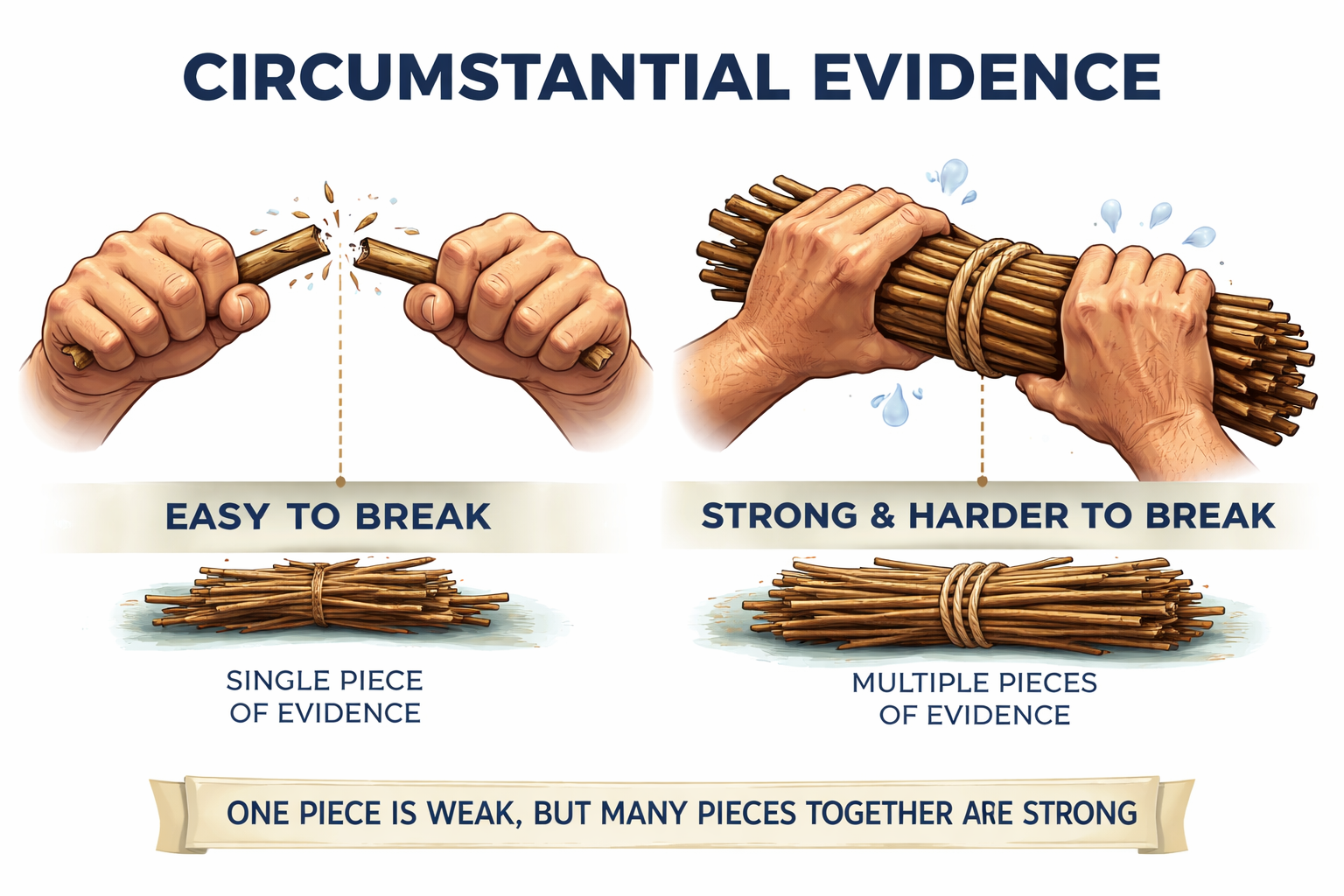
The strength of circumstantial evidence lies in the logical accumulation of consistent indicators.
The Advantages of Circumstantial Evidence
- Greater objectivity
Documents, financial records, CCTV, metadata, and system logs are less prone to memory distortion than human recollection.
- Ability to expose concealed behaviour
Misconduct such as fraud, coercive control, and corruption is often deliberately hidden, leaving circumstantial traces rather than direct proof.
- Difficult to consistently fabricate
False accounts often unravel when tested against independent records and timelines.
- Supports vulnerable witnesses
Circumstantial evidence can corroborate the accounts of vulnerable or traumatised individuals, including children, elderly people or distressed employees.
The Risks and Limitations Investigators Must Manage
- Over interpretation
Investigators may connect facts that do not logically support the conclusion.
- Confirmation bias
Once a theory forms, there is a risk of interpreting neutral facts as supporting that theory.
- Failure to consider alternatives
Courts require investigators to consider and test reasonable alternative explanations.
- Speculation disguised as inference
An inference must be based on evidence and logic, not suspicion or hindsight.
Criminal vs Civil Investigations: The Key Distinction
Criminal investigations
- be consistent with guilt
- exclude reasonable hypotheses of innocence
The standard is beyond a reasonable doubt.
Civil and workplace investigations
The standard is the balance of probabilities, meaning the conclusion must be more likely than not.
However, in serious allegations such as fraud or sexual misconduct, decision makers expect clear, cogent and persuasive evidence.
Using Circumstantial Evidence Effectively in Workplace Investigations
- build chronological timelines
- compare witness accounts with objective records
- identify inconsistencies and anomalies
- assess patterns of behaviour over time
- document why particular inferences are drawn
What Investigators Must Consider When Relying on Circumstantial Evidence
- Logical connection
- Independence of facts
- Completeness of the evidence
- Alternative explanations
- Consistency
- Weight vs quantity
The Central Issue: Investigator Reasoning
Courts and tribunals do not just assess the evidence; they assess the reasoning process used by the investigator.
Practical Takeaways for Investigators and Compliance Professionals
- Circumstantial evidence is not second best evidence
- Many successful findings rely on it entirely
- The strength of a case lies in logical reasoning, not the volume of evidence
- Failure to test alternative explanations can fatally weaken findings
- Clear documentation of reasoning is essential for defensibility
- Objectivity and discipline are more important than intuition
Conclusion
Circumstantial evidence is one of the most powerful tools available to investigators.
In workplace, regulatory, and compliance investigations, it is often the only evidence available.
When used correctly, it enables investigators to:
- reconstruct events
- identify misconduct
- support vulnerable complainants
- produce findings that withstand scrutiny
The role of the investigator is not to prove a theory. It is to test that theory rigorously against all available circumstances and to make sure any conclusion reached is logical, evidence based and fair.
Contact ACCA Aust for assistance at [email protected]