
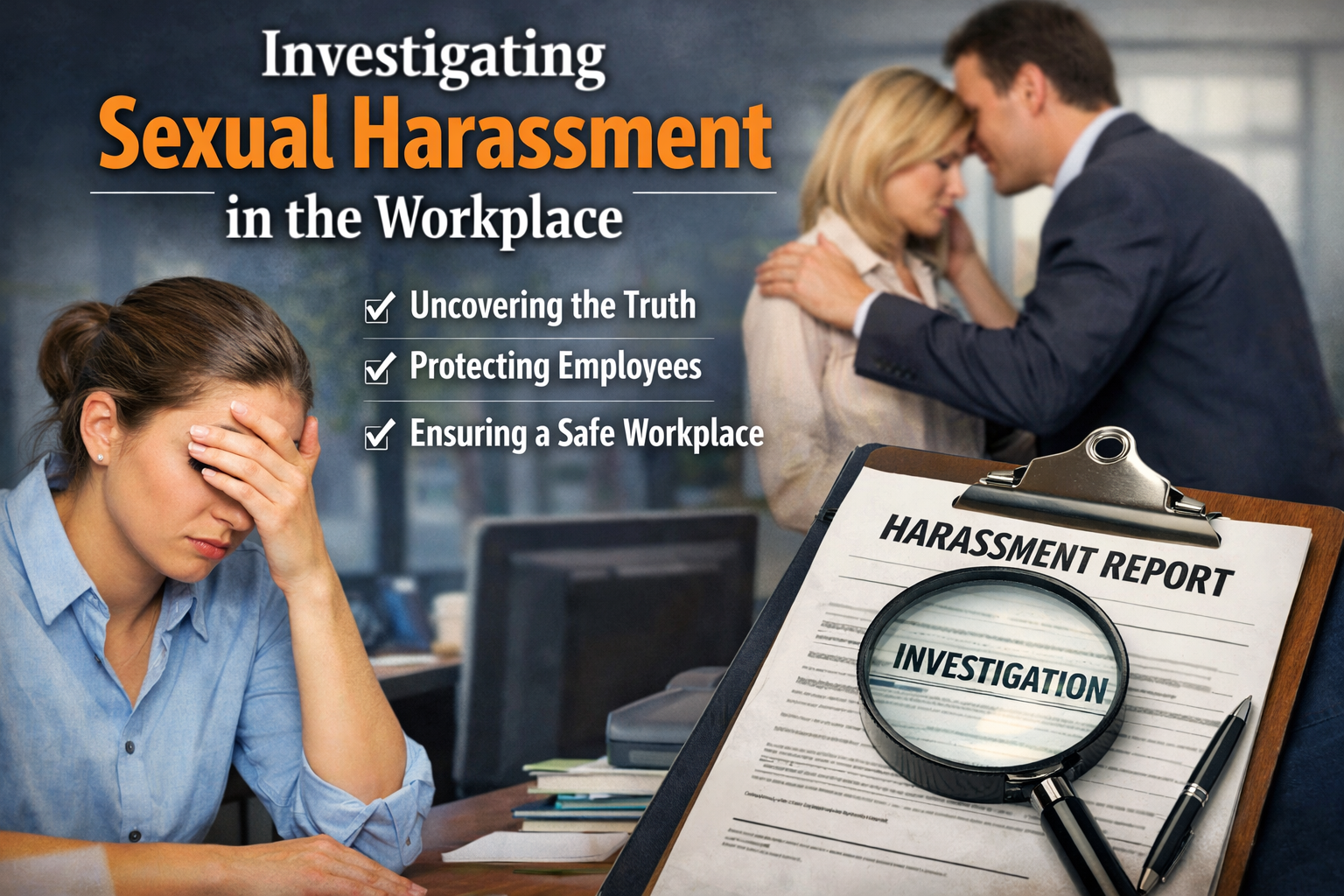
Sexual harassment is no longer something that sits only with Human Resources. In today’s workplace, it is a serious governance, risk, and leadership issue. Organisations in Australia are now expected to respond to sexual harassment allegations in a way that is fair, transparent, and professionally managed. When complaints are handled poorly, the consequences can include legal claims, reputational damage, low staff morale, and loss of trust in management.
This guide provides a practical, real-world approach to handling sexual harassment complaints in a way that is fair, legally defensible, and consistent with modern workplace expectations.
Understanding Sexual Harassment in Today’s Workplace
Sexual harassment is generally defined as unwelcome conduct of a sexual nature that causes a person to feel offended, humiliated, or intimidated. However, modern workplace investigations focus less on what the person intended and more on how the behaviour was experienced by the other person.
Sexual harassment can include:
- Inappropriate jokes or comments
- Unwanted physical contact
- Repeated requests for dates
- Suggestive emails, messages, or social media contact
- Sharing inappropriate images or content
- Behaviour that creates a hostile or uncomfortable work environment
Importantly, sexual harassment can occur in the office, at work functions, during travel, or through digital communication such as emails, messaging apps, and social media.
Why Handling Complaints Properly Matters
From a workplace investigation perspective, sexual harassment complaints are high-risk matters. If handled incorrectly, organisations may face:
- Legal action
- Workers compensation claims
- Industrial disputes
- Reputational damage
- Loss of staff trust and morale
- Media scrutiny, particularly in the public sector
For this reason, every sexual harassment complaint should be treated as a serious workplace complaint requiring a structured and procedurally fair investigation.
Have a Clear and Practical Policy
Every organisation should have a clear sexual harassment and workplace behaviour policy. However, a policy is only useful if employees understand it and feel confident using it.
A good policy should:
- Clearly define sexual harassment
- Provide examples of unacceptable behaviour
- Explain how to report a complaint
- Outline the workplace investigation process
- Commit to confidentiality and procedural fairness
- Clearly state that retaliation will not be tolerated
Policies should be reviewed regularly to ensure they reflect current Australian legislation and workplace expectations.
Make Reporting Safe and Accessible
One of the biggest issues in sexual harassment matters is underreporting. Many employees do not report behaviour because they fear retaliation, believe nothing will happen, or worry it will damage their career.
Organisations should provide multiple ways for employees to report concerns, such as:
- Reporting to a manager
- Reporting to HR
- Anonymous reporting channels
- Reporting to an external investigator
- Whistle blower channels (where appropriate)
Providing access to an independent workplace investigator is often considered best practice, particularly in small businesses, local government, and organisations where conflicts of interest may arise.
Take Every Complaint Seriously
A common mistake, organisations make is trying to “informally resolve” serious allegations too quickly or dismissing behaviour as a misunderstanding or personality conflict. This can significantly increase organisational risk.
Every complaint should be assessed properly and, where appropriate, referred for a formal workplace investigation. Even if the allegation appears minor, it should still be documented and assessed.
Act Quickly — But Fairly
Timeliness is critical in sexual harassment investigations. Delays can:
- Increase stress for the complainant
- Lead to evidence being lost
- Create perceptions that the organisation is ignoring the issue
- Increase legal risk
However, acting quickly does not mean rushing to judgement. A fair investigation requires:
- No assumptions
- Proper evidence gathering
- Interviews with relevant witnesses
- Procedural fairness for all parties
The best approach is to acknowledge the complaint immediately and commence a structured investigation as soon as possible.
Ensure Independence in the Investigation
One of the most important decisions an organisation can make is who conducts the investigation.
In many cases, particularly in SMEs, family businesses, and local government, using an external workplace investigator is the safest and most defensible option. An external investigator:
- Removes perceived bias
- Provides independence
- Brings investigation expertise
- Improves credibility of the outcome
- Reduces organisational risk
- Ensures procedural fairness
This is particularly important where allegations involve senior staff or management.
Follow a Structured Workplace Investigation Process
A proper sexual harassment investigation should include:
- A clear investigation plan
- Formal interviews with the complainant, respondent, and witnesses
- Collection of evidence (emails, messages, CCTV, personnel files, etc.)
- Maintaining confidentiality
- Making findings based on evidence
- Preparing a formal investigation report
Good documentation is essential. If a decision is later challenged in court or a tribunal, the investigation report and evidence will be critical.
Prevent Retaliation
Retaliation after a complaint is made is one of the biggest risks to an organisation. Retaliation can include:
- Excluding someone from meetings
- Changing shifts or duties unfairly
- Performance managing someone unfairly
- Bullying or victimisation
- Termination or demotion after a complaint
Employers have a legal obligation to prevent victimisation. This means actively monitoring the workplace after a complaint is made and after the investigation is completed.
Make Findings and Decisions That Are Defensible
At the conclusion of the workplace investigation, findings must be based on evidence — not opinions, assumptions, or office politics.
Possible outcomes may include:
- No finding
- Training or counselling
- Formal warning
- Final warning
- Demotion
- Termination of employment
The key is that the outcome must be proportionate, consistent, and clearly linked to the investigation findings.
Communicate the Outcome Carefully
Both the complainant and the respondent should be advised of the outcome in a professional and respectful way. While confidentiality must be maintained, both parties should understand that the complaint was taken seriously and investigated properly.
Poor communication at this stage can undo an otherwise well-run investigation.
Provide Ongoing Support
A workplace investigation does not end when the report is finished. Employers should:
- Check in with the complainant
- Monitor the workplace environment
- Ensure no retaliation occurs
- Provide access to EAP or counselling if required
- Consider whether team training or cultural change is needed
Focus on Prevention, Not Just Response
The best organisations understand that preventing sexual harassment is far better than investigating it after it occurs.
Prevention strategies include:
- Regular workplace behaviour training
- Clear behavioural expectations
- Strong leadership
- Early intervention when issues arise
- Culture and staff surveys
- Independent reporting options
Prevention is an ongoing process, not a once-a-year training session.
Leadership Sets the Workplace Culture
Workplace culture is driven from the top. If leaders ignore behaviour, minimise complaints, or avoid difficult issues, employees will notice.
Leaders must:
- Model respectful behaviour
- Act on complaints
- Support fair investigations
- Be visible in their commitment to a safe workplace
Without leadership support, policies and training will have very little impact.
Always Look for Improvement
Every workplace investigation provides lessons. Good organisations review each matter and ask:
- Did our reporting process work?
- Was the investigation handled quickly?
- Was the process fair?
- Do we need better training?
- Are there cultural issues we need to address?
Continuous improvement reduces future risk.
Conclusion
Handling sexual harassment allegations in 2026 requires more than simply following a policy. It requires professionalism, procedural fairness, independence, and strong leadership. Organisations that respond properly not only reduce legal and reputational risk, but also build safer, more respectful workplaces where employees feel confident to speak up.
If your organisation requires an independent workplace investigator or advice on handling a sexual harassment complaint or workplace investigation, ACCA Aust provides professional, independent investigation services across Australia.